The exhibition begins with a biographical profile of Fenosa (1899-1988). It covers his exile in France - in 1920 and in 1939 - where he was integrated into the circle of artists and intellectuals of the avant-gardes. His biography takes us back to historical moments: anarchism, the beginnings of vegetarianism, or the new teaching models linked to the new pedagogies. His commitment to the Republic and to artists' unions led him to resettle in Barcelona, and from the 1970s onward, on the occasion of major retrospective exhibitions, as well as the placement of monumental pieces such as the ensemble inspired by Pau Casals in Turó Park. His connection with El Vendrell is also mentioned, where he acquired a palace that became a summer residence and an international meeting point for friends and intellectuals. Today, the former Palau Nin is the seat of the Apel·les Fenosa Foundation. The exhibition: A first section highlights spaces linked to his birth and training in Barcelona, between 1899 and 1919. The house where he was born near the Sagrada Família, the schools where he studied (Horaciana - the first school in Barcelona to work with the Montessori method - or the School of Arts and Crafts), the trade union of the culture commission, or his father's vegetarian restaurant on La Rambla. In 1920 he deserted military service and went into exile with his brother to France. A second stage covers his return to Catalonia (1929-1936) and documents spaces such as Sala Parés, the first gallery where Fenosa exhibited his sculptures, houses where he lived, workspaces, and his participation in the artistic and social ferment of Catalonia during the advent of the Republic. A third space brings together the settings related to Fenosa during the Civil War (1936-1939), when he became involved in actions to protect the artistic heritage from the war. Here we can find the headquarters of the Sindicat d'Artistes, the churches of Santa Anna and Santa Maria del Pi. In 1939, Fenosa went into exile in France again. Finally, a fourth area highlights the city's recognition through retrospective exhibitions and a collection of his works in public spaces of the city. Fenosa received the Gold Medal of the Generalitat in 1982 and also that of the City of Barcelona in 1987. The exhibition is complemented by two sculptures by Fenosa, Metamorfosi, from 1964 and 1963, and a maquette of the sculpture of Pau Casals located in Turó Park in Barcelona. A bust of him made by Vivette Monod can also be seen. It is the first time that the bronze portrait donated by the Association des Amis d'Apel·les Fenosa in Paris can be seen in Barcelona. The Curator The curator of the exhibition is Nekane Aramburu, cultural manager, museologist and international curator. She currently directs the Apel·les Fenosa Foundation. She has previously been director of institutions such as Es Baluard in Palma (2013-2019) and Espacio Ciudad in Vitoria (1999-2010). Parallel activities Round table. "Una conversa sobre els orígens de Fenosa a Barcelona" ("A conversation about Fenosa's origins in Barcelona"). Cotxeres Palau Robert. Thursday 22 October, at 19:00. Dialogue between the curator of the exhibition "Altes Fenosa", Nekane Aramburu, and Dolors Marín, historian and researcher, specialist in European social and political movements, particularly the history of the libertarian movement. Activation of the exhibition with Marcel·lí Antúnez Roca Thursday 5 November at 19:00. Palau Robert garden. Activation of the exhibition with this pioneering artist, known for developing transgressive work that fuses technology and body art. Researcher of anarchist and naturist movements of the late 19th and 20th centuries, he integrates these concepts into his new projects. Guided tour of the exhibition with the curator, Nekane Aramburu Wednesday 2 December at 18:00. Entrance of Palau Robert.
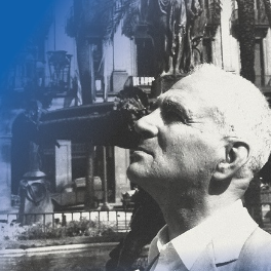
Atles Fenosa Barcelona
- WherePalau RobertPg. de Gràcia, 107, Barcelona
- When14 Oct 2026 to 8 Dec 2026
- PriceFree
Overview
Machine translated into English.
Reviews
No reviews yet. Be the first to write one.