What is the Museum's Living Roof?Total roof surface 14,000 m2, Living Roof 7,100 m2The characteristics and location of the buildings condition the types of plants on the green roofs. The Roof has a weight limit, the sea is nearby and the wind often blows here. To avoid exceeding the established weight, herbaceous plants that need only a thin layer of soil have been chosen, avoiding trees or heavy vegetation.The Living Roof has flora adapted to the environmental conditions of the Mediterranean and specifically of Barcelona and its proximity to the sea.The Museum's roof is a natural laboratory where research can be carried out in different areas of science. Because of its characteristics, projects on fauna, water quality or climate change can be carried out here, in a controlled environment.These projects are developed by the Museum's scientific teams in collaboration with other research centres and universities.What is there on the Living Roof?The experimental areas allow research in different areas of the natural sciences:A good indicator is soil microbiome. To do this in a controlled way, we use mesocosms: small greenhouses in the shape of a hexagonal dome, open at the top. These structures keep the interior temperature 2 °C higher than the exterior, in order to simulate the predicted effects of climate change. We study how microbial communities change inside the mesocosms and outside them in order to identify warning signals. In this way, we can anticipate possible tipping points and better understand ecological limits before changes become irreversible. This allows us to see that small variations cause large changes in how ecosystems function.Mesocosmos is a project promoted by the Complex Systems Laboratory (Pompeu Fabra University), the Laboratory of Drylands and Global Change (University of Alicante), the Barcelona Museum of Natural Sciences, and it is one of the winning proposals of the grant call for research and innovation promoted by Barcelona City Council and the "la Caixa" Foundation.Mediterranean meadows of annual plants, which survive the summer heat as seeds when the plant dries out, or as bulbs underground, waiting for better conditions to sprout again. They are plants adapted to proximity to the sea. They bring benefits to the city environment, to the building and to people's health.Freshwater ponds, with plants that adapt to the water and climate conditions of Barcelona. Many animals, small and large, live here, helping to maintain a balanced and self-sufficient natural environment.The insect hotel and the melliferous plants, which attract pollinating insects, help conserve bees and solitary wasps, essential for maintaining the balance of natural ecosystems.The garden of the world's Mediterranean regions is a small sample of the plants of the Barcelona Botanic Garden dedicated to world Mediterranean flora, since, apart from the Mediterranean Basin, this type of climate is characteristic of some regions of Chile, Australia, California and South Africa.
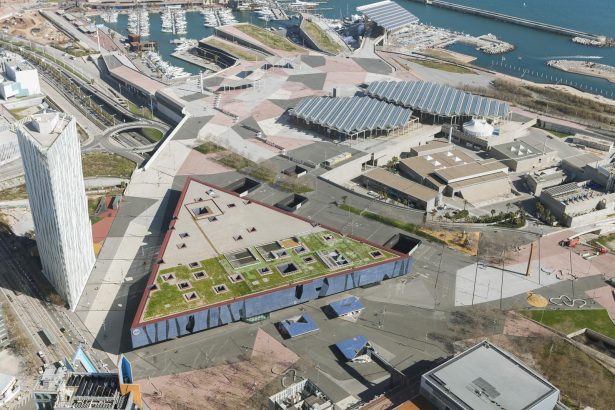
El Terrat Viu
- WhereMuseu de Ciències Naturals de Barcelona08001
- WhenFrom 25 Sept 2021
- PriceEntrada general de: 6 a 10.5 € Entrades: · Museu de Ciències Naturals: 6 € · Exposició temporal: 6.50 € · Combinada Museu de Ciències Naturals Jardí Botànic: 7 e · Combinada exposició permanent "Planeta Vida" exposició temporal: 10.50 € · Reduïda: 2.70 € · - persones entre 16 i 29 anys · - persones de + 65 anys · - Aturats · - Targeta rosa reduïda · - Families (max 2 adults) · - Families nombroses i monoparentals · - Carnet de Biblioteques de Barcelona · - Grups + 10 persones · Conjunta general: 7 € · Conjunta reduïda: 3.5 € · Entrada gratuïta: · - Menors 16 anys · - Targeta Rosa gratuïta · - 1r diumenge de mes · - Diumenges a partir de les 15 h · - Registrats al programa Gaudir+BCN · - 12 de febrer (Santa Eulàlia) · - 18 de maig (Dia Internacional dels Museus) · - 24 de setembre (La Mercè)
Overview
Machine translated into English.
Reviews
No reviews yet. Be the first to write one.