The L'Hort Petit del Monestir, as the nuns call it, is a walled enclosure of almost 3,000 square metres of cultivated land, located on the south façade of the walled complex, in front of the sala de les Procures, the space where the harvest was stored. From this garden, which is not so small, the nuns have taken some of the greens, vegetables, legumes or fruits they cooked, as well as the herbs with which they prepared medicines for the community from the founding of the convent in 1327 until the late 20th century. In 2017 the Museu del Monestir began a project to recover the original use of this space, with the aim of reconstructing a four-plot garden as it may have been in the Middle Ages. For this reason it does not include the species that arrived in Europe from America after 1492. To learn as much as possible about how the medieval garden might have been, a multidisciplinary team was formed of specialists from the fields of history, archaeology, botany, archaeobiology, architecture, museography, environmental education and social services, who have approached the project from different angles. The archaeological intervention carried out at the start of the works made it possible to document five clear chronological phases of use of the space, dating between the 14th and 19th centuries. Thanks to this study, the historical paths and traditional irrigation installations were recovered in the subsoil of the garden. Based on all this knowledge, it was possible to carry out the design of the space and of the various museographic elements, as well as the distribution of the plots, so that coexistence is guaranteed between the green space, the architectural and historical structure of the monastery and the museified space. The recovery of the garden from a historical perspective has involved an exhaustive study to determine the species that were to be sown. To do so, the medieval documents kept in the archive of the Monastery itself were consulted, as well as the agricultural treatises of the period that record the species and cultivation techniques used during the Middle Ages.
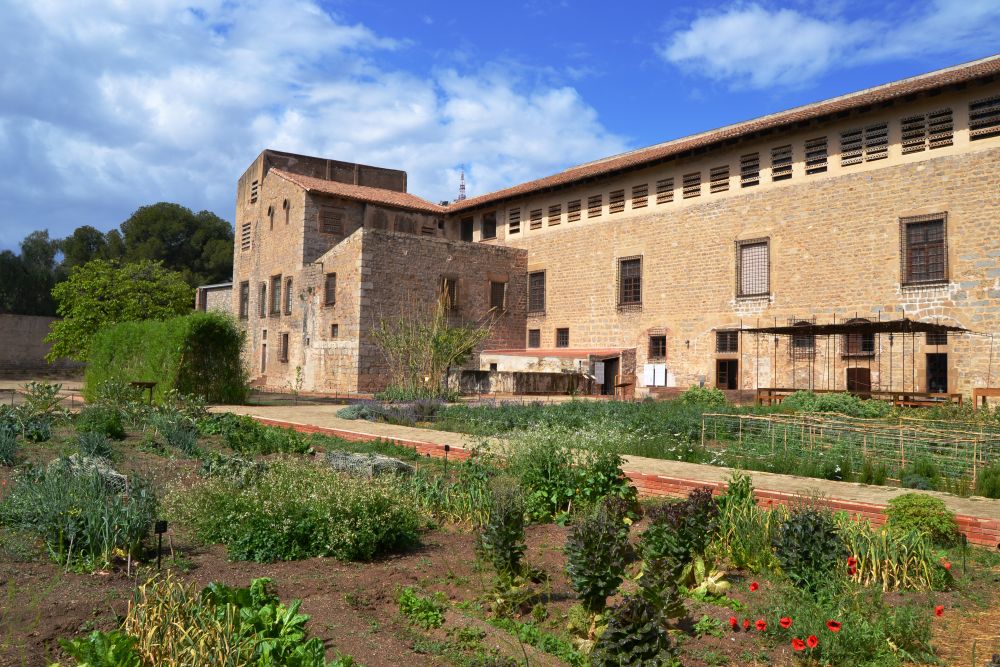
Exposició 'L'hort medieval del monestir'
- WhereReial Monestir de Santa Maria de Pedralbes
- WhenFrom 1 Jun 2022
- PriceEntrada general: 5.2 € · Entrada reduïda: 3.70 €: · . Majors de 65 anys · . Pensionistes · . Menors de 30 anys · . Famílies nombroses i monoparentals · . Persones en situació d'atur · . Titulars del carnet jove · . Titulars de la targeta rosa reduïda · . Carnet de biblioteques · . Titulars de la targeta BCN Express · .Grups de més de 10 persones · Entrada gratuïta: · · Primer diumenge de mes · · Diumenges, a partir de les 15 h · · Registrats al programa Gaudir+BCN · · Menors de 16 anys, acompanyats · · Membres acreditats d'ICOM · · Guies turístics · · Professors ensenyaments reglats · · Targeta rosa gratuïta · · Barcelona Card · · Passi metropolità acompanyant persona discapacitada · · Periodistes acreditats · · 12 de febrer (Santa Eulàlia) · · El 3 de maig (fundació del monestir) · . 4 de juny (Dijous de Corpus) · · 24 de setembre (La Mercè)
Overview
Machine translated into English.
Reviews
No reviews yet. Be the first to write one.