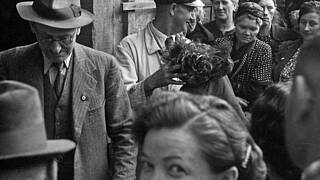
Long after the end of the Second World War, many Germans claimed to have known nothing about the mass murders committed during the Nazi era. In this way they hoped to escape the accusation of being complicit in the crimes. To this day, many people are still concerned with the question of what Germans actually knew.
What information about the Holocaust was accessible in the German Reich? What did Germans perceive who were not directly involved in the acts and were not persecuted themselves? How did corresponding information and rumours spread back then? And what did individual people do with their knowledge? The exhibition pursues these questions.
The exhibition consists of three parts: "Propaganda" sheds light on what the Nazi regime publicly announced about the persecution and murder of Jewish women and men. "Hinweise im Alltag" brings into focus rumours and unofficial news about the mass murders. "Vom Puzzleteil zum Bild" shows how individual people put information together to gain an overall picture.