The exhibition is devoted to the ritual use of artworks and sheds light on some of the most important ceremonies in the East Asian cultural sphere. Religious practice in Buddhism, as in other religions, is shaped by rituals that are performed at different times and for different purposes by monks, nuns and laypeople. In the Buddhist annual cycle, certain holidays play a major role, on which, for example, the birth or death of the founder of the religion, the historical Buddha Shakyamuni, is solemnly commemorated, but also fasting festivals, temple foundings or seasonal rituals. At the centre are cult images of various Buddhas, Bodhisattvas (enlightened beings who help the living beings in this world), important monks or patriarchs. Ritual cult objects such as powerful sceptres (Skt. vajra), bells or incense burners are used in the ceremonies.
In the exhibition, a small gilded Sino-Tibetan sculpture of the child Buddha refers to the celebrations of Buddha's birthday on the 8th day of the 4th lunar month, and a Japanese hanging scroll of Buddha's entry into Complete Nirvana refers to the annual commemoration of his death day on the 15th day of the 2nd lunar month.
Rituals before the altars of individual deities were performed daily in temple halls, separate or private prayer rooms. For this, the exhibition presents one of the museum's most important Japanese Buddhist sculptures, a Buddha Vairocana from the early 12th century. Selected ritual implements are also on view, including a vajra bell and a vajra sceptre, which were used in the secret ceremonies of the esoteric Buddhist schools of this Buddha.
The veneration methods in the "Pure Land School", which were dedicated to the Buddha Amitabha, were aimed at the common people of lay followers and propagated a simple invocation of the name of the Buddha Amitabha. The exhibition also offers impressive pictorial examples here, such as a reduced copy of the monumental Taima Mandala or Japanese sculptures of the Buddha descending toward the believer, together with his two attendants.
The Bodhisattva Kshitigarbha, who was able to free the dead from hell, had his own halls in East Asian temples, where he resided with the ten kings of hell. A Korean hanging scroll of one of these kings of hell shows how donation rituals in this context were organised.
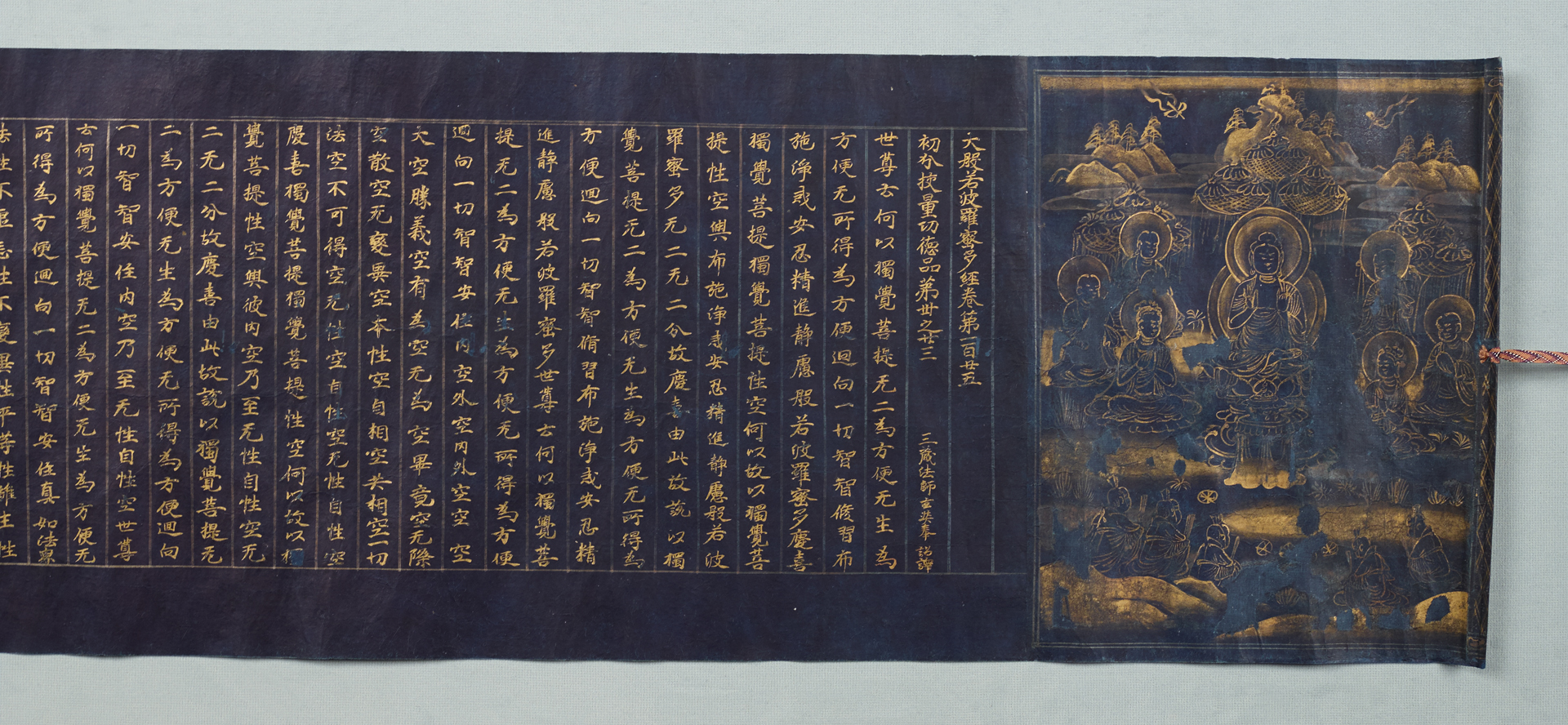
Everyday purification and meditation rituals, which are meant to pave the way to enlightenment, have also been preserved in texts or picture scrolls. Further rituals in the temple, but also in public or private contexts, served to obtain wishes (money, success, long life) or to ward off evils (illness, crop failure, crime). Buddhist lay followers mostly donated money here for incense, flowers or food. The donation and consecration of sculptures and steles, the copying of Buddhist texts, as well as the ritual circumambulation of a stupa can also be traced using the exhibition objects, such as the Chinese rubbing of one of the four entrance reliefs of the famous Great "Wild Goose Pagoda" in Xi'an.
The last room is devoted to the reconstruction of the typically Korean consecration of a Buddhist image, the Bulbokjang ceremony (literally: "hiding inside the Buddha"), which took place at the Museum of East Asian Art Cologne. Every Buddhist image is transformed into a powerful cult image through such an eye-opening ceremony. A special feature of Korean practice since the 18th century is the insertion of texts and other sacred objects, which are attached in a bag or packet to the back of the sculptures or applied to the back of hanging scrolls.