The gift
In 2025, Agnès Rosenstiehl donated to the Centre national de la littérature pour la jeunesse at the BnF 625 plates, in very diverse formats and media, and around a hundred preparatory works relating to the edition of 23 albums published between 1967 and 2022 by Éditions des Jumeaux, Des Femmes, Larousse, Gallimard, or La Ville brûle.
The exhibition in brief
Coup de poker et coups de génie : l'entrée en littérature jeunesse,1966-1973
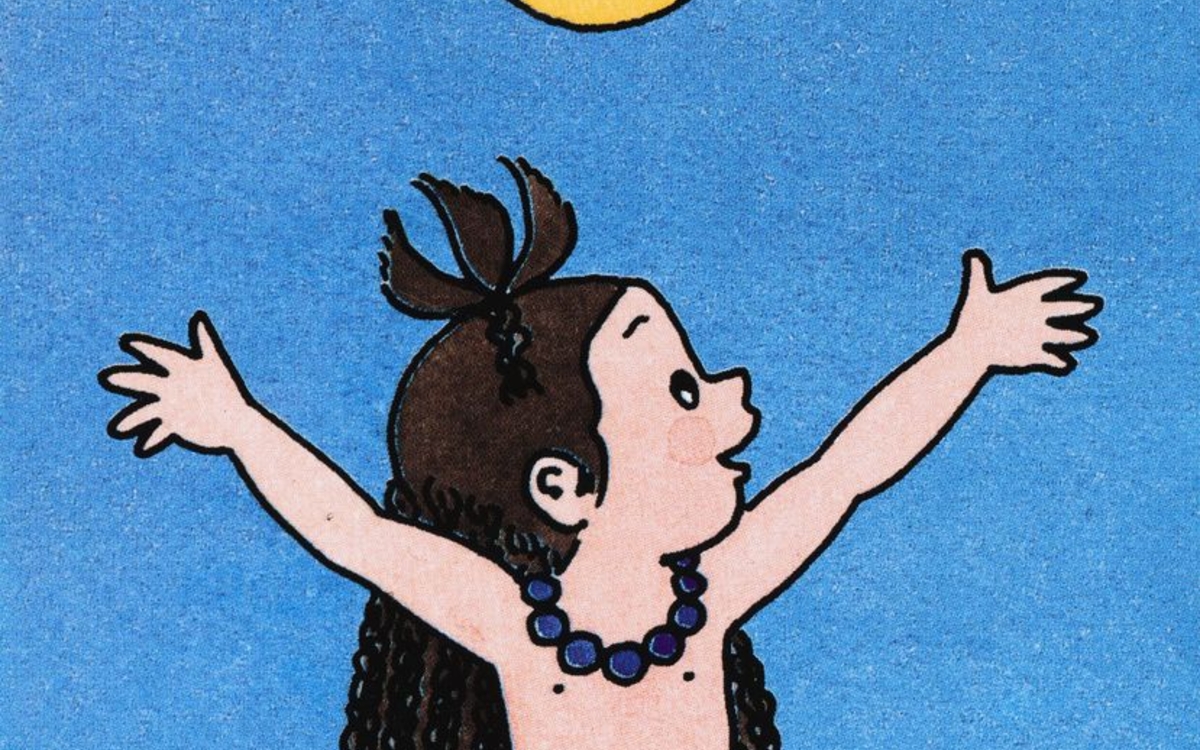
Agnès Pinsard (maiden name), later Gay until 1973, then Rosenstiehl, published in 1967 with Éditions des Jumeaux De la coiffure, a surprising and poetic album that plunges into the imagination of a little girl with (too) short hair. Purity of line, freedom of tone, the genius of childhood: three constants that run through her later works, including La Naissance (1973) and Les Filles (1976).
Mimi Cracra et les années Pomme d'Api, 1966-2008: a laboratory of childhood
Quickly adopted by the very young magazine Pomme d'Api, Agnès Rosenstiehl refined a minimalist, instinctive and colourful style there, and in 1976 she created Mimi Cracra, who within a few years became one of the most emblematic heroines of the magazine. Despite their parents sometimes being reluctant about her freedom of speech and action, young readers identify with this independent and resourceful little girl, into whom Agnès Rosenstiehl put much of herself.
From 1985 onward, editorial and audiovisual adaptations gave Mimi Cracra a popularity that partly explains her longevity. Her adventures, published in Pomme d'Api until 2008, are regularly reissued by Éditions du Seuil Jeunesse, and attachment to the character remains strong among the generations who grew up with her.
Creating books that do not exist: the documentary years, 1977-2020
While Mimi Cracra remains Agnès Rosenstiehl's most emblematic work, it is only one stage among many in a particularly rich creative career. From 1977, Larousse published her first two abecedaries, including Drôle d'alphabet ou les aventures d'une tarte aux pommes, in which the author features a band of mischievous children who express themselves through onomatopoeia and alliteration. The following year saw the publication of L'Alphabet fou ou le livre des syllabes sibyllines, a collection of tongue twisters designed to be spoken aloud, which confirmed her singular talent for combining linguistic rigour with fantasy. Buoyed by this critical success, her documentary work gradually expanded to many subjects, including algebra, figures of speech, dictionaries, travel, colours and civil rights, published by Larousse, Gallimard and Thierry Magnier, bearing witness to an intellectual curiosity and an constantly renewed inventiveness.
(Re)editing Agnès Rosenstiehl: L'Alphabet fou ou le livre des syllabes sibyllines
An essential figure in children's literature, Agnès Rosenstiehl has seen many of her albums reissued throughout her career, six of them since 2018 by La Ville brûle.
On the occasion of the exhibition, Éditions de la BnF are reissuing one of her emblematic albums, L'Alphabet fou ou le livre des syllabes sibyllines, with the author's collaboration. This reissue showcases the original plates deposited by Agnès Rosenstiehl at the BnF, supplemented by a few plates recoloured in watercolour in the absence of the originals. The book is also enhanced by an audio version, which lets listeners hear the inimitable voice of Agnès Rosenstiehl reading these assonances she wrote fifty years earlier.