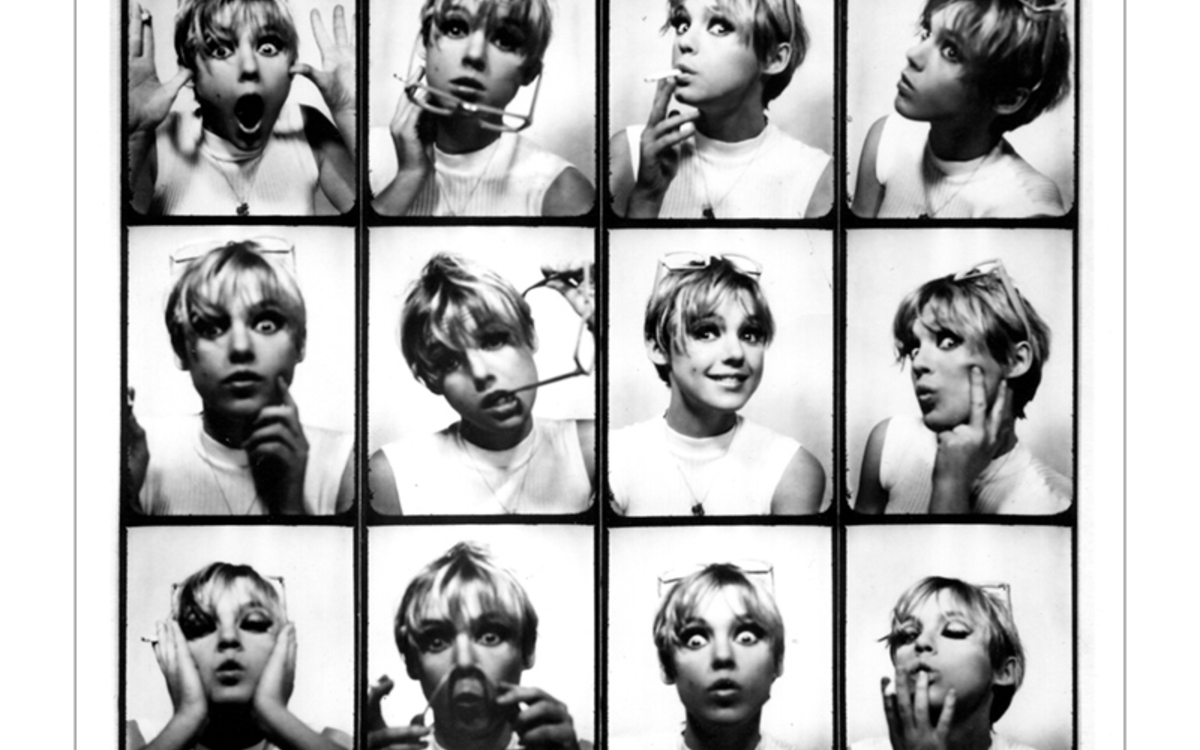
This exhibition is also the story of a loyalty and friendship between Gerard Malanga and agnès b. In 2004, several prints by the artist were already shown at Galerie du Jour as part of the group exhibition Bande à Part, devoted to this constellation of artists and personalities who shaped the New York underground scene. More than twenty years later, his gaze returns to the gallery, like a living memory of that era, still as free and intimate as ever.
Born in the Bronx in 1943, Gerard Malanga met Andy Warhol in 1963, at the age of twenty, through the poet Charles Henri Ford. He then joined the Factory and quickly became one of the central figures of this extraordinary artistic adventure. His career spans music, poetry, film, performance and photography, erasing the boundaries between disciplines.
Over the course of his encounters, Malanga photographed those who embody this era: Andy Warhol, William S. Burroughs, Mick Jagger, Iggy Pop, Dennis Hopper, Lou Reed, Patti Smith, Robert Mapplethorpe, Candy Darling and many others. His photographs do not seek to manufacture icons. They seem, on the contrary, to bring them closer to us, capturing the artists in moments of presence, complicity, solitude or abandon.
Perhaps this is where the particular strength of his work lies. Behind the figures who became mythical, Malanga reveals people: friends, travelling companions, beings met on the way through an evening, a concert, an apartment or a café. His camera becomes a way of keeping a trace of these relationships and of this ephemeral community.
I photographed them because they were my friends, because I loved them, because they were there.
Gerard Malanga, photographer. This emotional dimension deeply permeates his work. It makes Malanga's photography not only an exceptional archive of an era, but also the narrative of an artistic community, of a generation and of the friendships that passed through it. And although this New York scene now belongs to history, it has lost none of its capacity to electrify us. In Malanga's gaze, it remains alive and profoundly human.