In 1951, Robert Capa advises Jean Marquis (1926-2019), actor and drama animator, to look toward photography. He has the eye. Three years later, he joins the Magnum Photos agency alongside Robert Capa, Henri Cartier-Bresson and Chim.
From streets to fields, from factories to haymaking, from Liverpool to Budapest, from Algerian settlers to camel drivers at the Touggourt market and the Clos Salembier shantytown (1958), Jean Marquis roams everyday life: a press review by Pierre Mendès France on a train, bread-making in the village, acting direction by Jean Renoir for French Cancan.
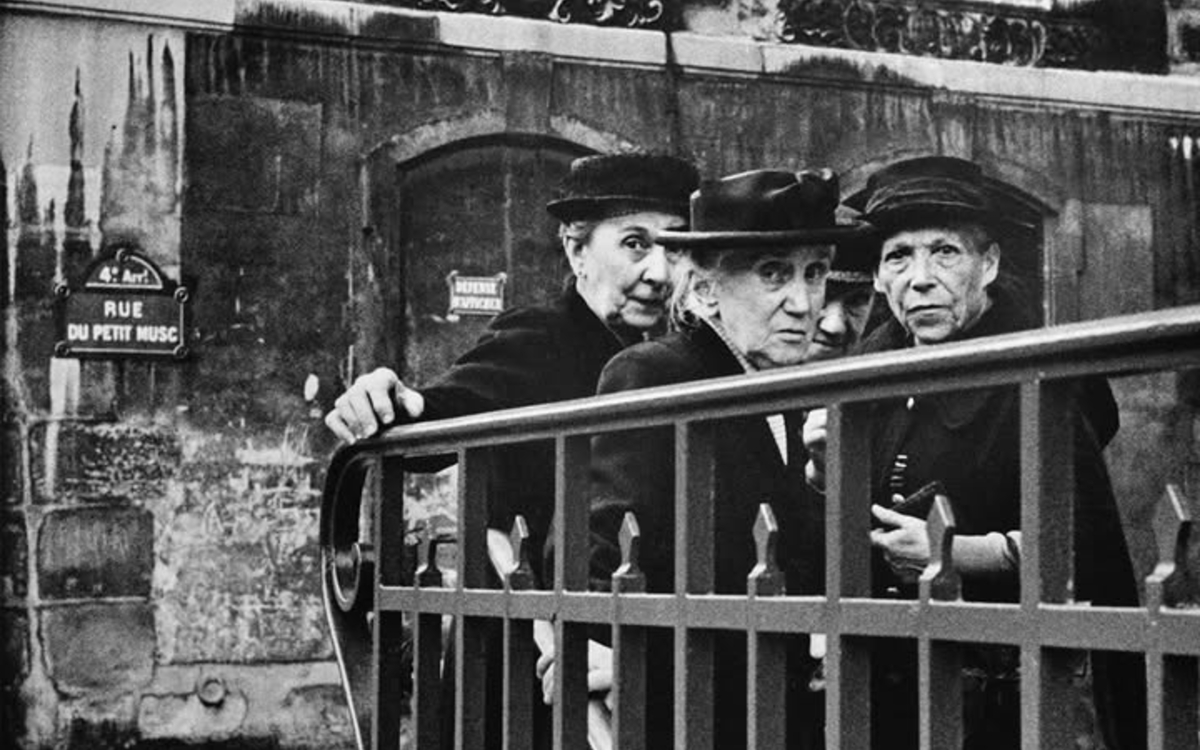
Jean Marquis orders space, arranges his characters, frames with maestria: a laboring crowd from Merlebach returning home, old women with ravaging eyes on the rue du Petit Musc, a solitary railway worker along the Deûle, the first major "initiatory" report for Magnum.
The photographs impose themselves with the obviousness of their slice of life, symbols of the ancestral customs of Corrèze, attestations of the modernity of the Trente Glorieuses, documents of the permanence of struggles.
Edward Steichen, director of the photography department at MoMA, spots him and selects him for the exhibition The Family of Man (La Grande Famille des hommes) in 1955. Numerous retrospectives in institutions in France and abroad follow.
Jean Marquis covers the social and artistic ferment: wildcat strikes, meetings in workplaces, various demonstrations in favor of causes close to his heart: support, at Place de la Nation in Paris, for the Rosenbergs on death row in the United States (1953), the burial of demonstrators for peace in Algeria, victims of repression at the Charonne metro (1962), social unrest of May 1968, a general assembly of farmers (1983), jazz, shows, film shoots: he is there at the appointment with History.
Eyes alert, he captures youth and its protest surge in the Latin Quarter; André Malraux, at the end of his strength, bidding farewell to the political scene at the last Gaullist demonstration at the Arc de Triomphe (30 May 1968).
The press appreciates him and publishes him. He begins a regular collaboration with L'Express, Science et Vie, Time, Sports Illustrated, Fortune Magazine, Life. Covers multiply: the actress Gina Lollobrigida for Robert Siodmak's Le Grand Jeu for Match (1954), a former deportee from the extermination camps in a striped shirt for Life (1958), Brigitte Bardot, the world star, for L'Express (1962)…
Louis Aragon invites him to follow the wanderings of his anthology of poems Il ne m'est Paris que d'Elsa (1963). Jean Marquis takes on the animation of the Parisian streets, Montmartre still as in the past with its windmill.
Europe, Iran, Senegal, Algeria: Jean Marquis travels as a special correspondent for the international press. In Lapland (1956), he is at the height of his art in the intimacy of the Sámi, at the heart of their traditions and customs. He conveys the wild and tender happiness of children, the carefree nature of their games, the radiance of the quiet beauty of their parents like a lifeline, a mark of his empathy, of a discreet yet pervasive ethic at the source of his work.
In 2011, Jean Marquis entrusts the distribution of his photographs to the Roger-Viollet agency, a set of which comes from the collection of the Bibliothèque historique de la Ville de Paris.