CARE France is an association that has been fighting poverty and inequality around the world for 80 years. It is interested in the correlation between climate change and gender.
“Climate change is sexist” because it affects women and girls around the world in a disproportionate way. They are the ones taken out of school to fetch water from ever further away during droughts. The ones forced into marriage so there is one less mouth to feed. The ones who sacrifice themselves when food runs short due to destroyed harvests. And the ones who experience an increase in domestic violence during heatwaves.
But women and girls are also the champions of adaptation efforts in their communities. Agroecology, education, health programmes, economic empowerment… women and girls are actors of solutions.
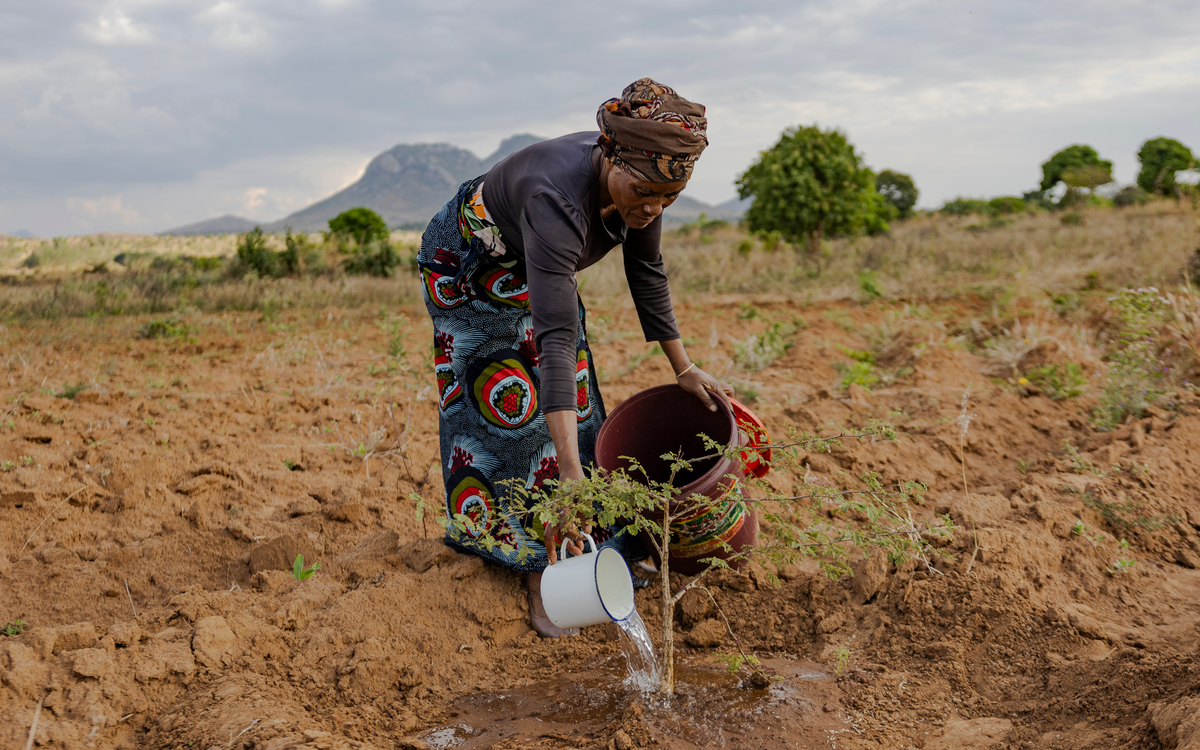
Shrimp caught in the mangrove are sold at market by an intermediary, as women are forbidden to trade there. Bangladesh, Ruhita. July 2026. ; Crédits : Agnès Dherbeys/MYOP Lebanon, Akkar district. Café along a river between Akroum and Wadi Khaled, once a major water source. “I remember the moment the local spring dried up. It was our main water supply; everyone was terrified.” Huda al Mohamad, Lebanon, Akkar district, August 2026. ; Crédits : Chloé Sharrock/MYOP Josselyn Vega Rojas is an indigenous Kichwa Panzaleo woman, farmer and mother of two children. Ecuador, Cotopaxi Province. August 2026. ; Crédits : Adrienne Surprenant/MYOP Memory Kassim runs a village savings system that allows the women of her village to take turns obtaining small loans to finance an activity or meet their children’s needs. Malawi, Katuli region. July 2026. ; Crédits : Laurence Geai/MYOP
In this context, Agnès Dherbeys, Chloé Sharrock, Adrienne Surprenant and Laurence Geai, four women photographers from the MYOP agency, committed to this gender and climate nexus, document the lives of four of these women, climate heroines, in Bangladesh, Lebanon, Ecuador and Malawi. Their context (drought, floods, water scarcity, El Niño, etc.), their family and professional lives, and their place as community leaders: these in-depth, sensitive and human reports show us the strength and transformative power of women in the face of climate change.