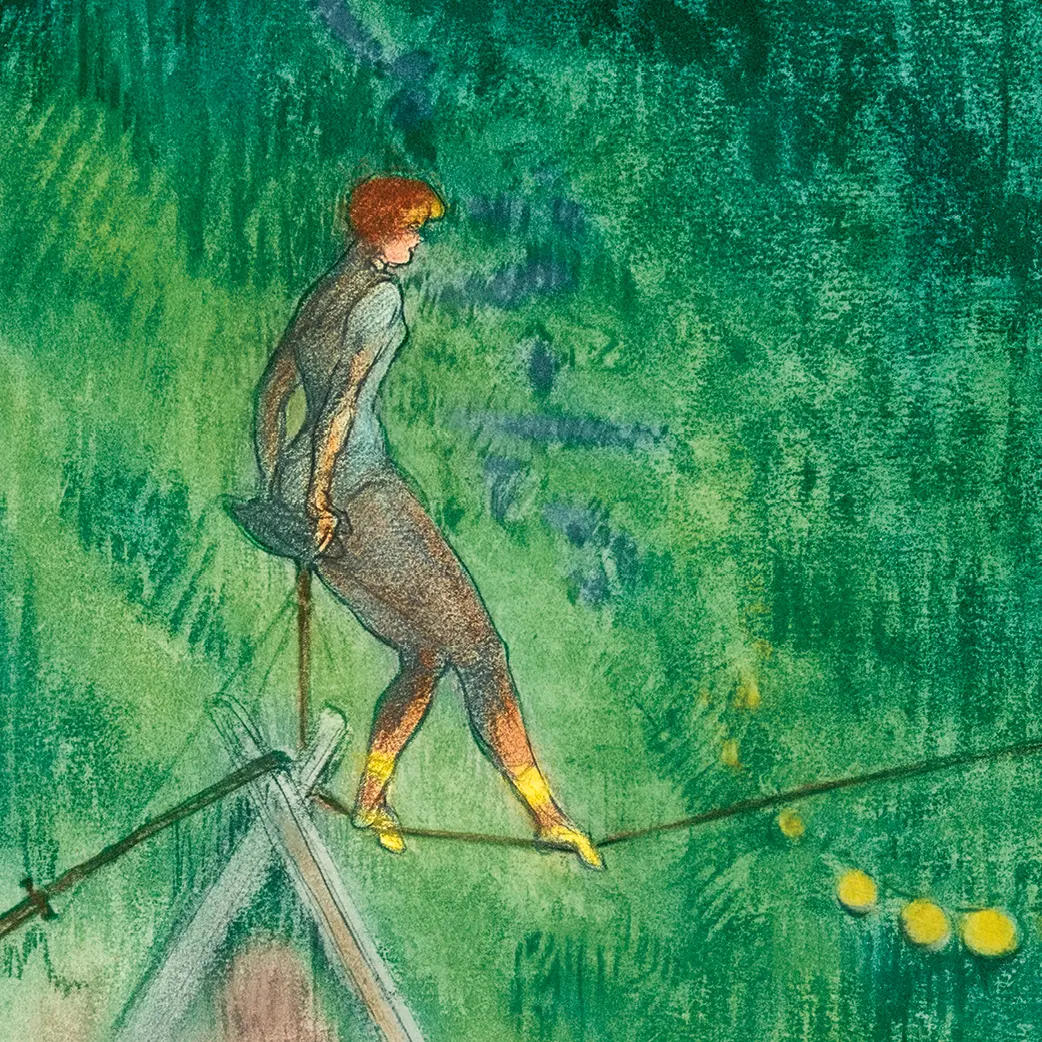
For nearly a century, from 1873 to 1972, the circus set the heart of Montmartre beating. A few steps from the studios of the Bateau-Lavoir, the Cirque Fernando, later known as the Cirque Medrano, established itself as one of the landmarks of Parisian life. Behind the feats of the acrobats, the brilliance of the costumes and the magic of the ring, generations of painters discovered an unparalleled field of experimentation.
Degas, Seurat, Toulouse-Lautrec, Picasso, Chagall, Rouault, Léger and many others found there far more than entertainment: a space where new ways of looking, of representing movement and of thinking about modernity were invented.
For a long time, the history of modern art was built around artists' studios, theoretical manifestos and the major aesthetic movements that marked its evolution. The Musée de Montmartre invites visitors to explore another, more unexpected history: that of the circus as a crucible of creation.