What is it about? The exhibition unfolds through a chronological route tracing Irving Penn's career, from 1947 to 2008. It begins in the 1950s, with the presentation of his legendary images of Parisian haute couture collections, such as Dior and Balenciaga, magnified by the greatest models of the era, such as Lisa Fonssagrives and Jean Patchett. In the 1970s, the creations of Ungaro and Courrèges and the extravagant outfits worn by Marisa Berenson or Lauren Hutton caught the attention of the American, then, the following decade, those of Yves Saint Laurent and Karl Lagerfeld. Always faithful to a demanding vision, whatever the context of the commission, Irving Penn helped bring art, fashion and commerce together with unprecedented mastery. His work is characterized by an aesthetic of elegant simplicity. Irving Penn, « Fashion Photograph » (Jean Patchett), New York, 1949, Nicola Erni Collection, Zug. ; Crédits : The Irving Penn Foundation Irving Penn, « Harlequin Dress » (Lisa Fonssagrives-Penn), New York, 1950, Collection The Irving Penn Foundation , New York © Condé Nast. ; Crédits : Collection The Irving Penn Foundation , New York © Condé Nast Irving Penn, « Yves Saint Laurent Embroidered Cubist Cape with Braque Inspired Design », Paris, 1988, Nicola Erni Collection, Zug © Condé Nast. ; Crédits : 1988 Nicola Erni Collection, Zug © Condé Nas L'avis de la rédaction We'd rather tell you right away: this exhibition will make you raise your eyebrows, widen your eyes, wrinkle your nose and purse your lips. Irving Penn is one of those photographers who do not merely capture a scene, a pose or an expression: he seeks to provoke an emotion in the gaze of whoever contemplates his work. From the mid-1940s on, the American displayed a striking visual efficiency. It began when he played with lighting and neutral backdrops, and got rid of accessories, sets and even extras. For the first time in fashion photography, the series read like short films, or better: stylized photo-novels of a wild modernity. Throughout the route tracing his work, what stands out is his ability to let white express the details of black. Irving Penn makes corsets and upright hats, oblique collars and structured skirts, graphic belts and perfectly drawn eyebrow and lip makeup converse. But where he nearly reaches the sublime is when he humanizes his models. One sees some Robert Doisneau in it, with whom he was close for many years, but also surrealism, inspired by his friendship with designer Alexey Brodovitch, and poetry, thanks to the cartoonist Moebius. Even in his editorial work for Vogue in the 1980s, 1990s and 2000s, one finds modern codes, close to what can be seen on Instagram today. The first 'beauty' still life is owed to him, when he photographed the contents of a makeup bag artfully spilled. Later, Irving Penn showed boldness by turning a model's mouth into a paint palette with lipsticks, or dressing a model's face in a heavily stitched rugby ball to denounce excessive cosmetic surgery. At first glance, one notices the materials and textures, but, looking more closely, his sense of composition and contrasts stands out. Enough to leave us speechless... Khadija M. The exhibition, mostly designed from the collection of the Maison européenne de la photographie (Paris Centre) and that of Nicola Erni, is one of the largest and most remarkable ensembles devoted to fashion photography, covering the period from the 1930s to the present. Assembled over the past twenty-five years, it also benefits from numerous exceptional loans from The Irving Penn Foundation and The Miyake Issey Foundation.
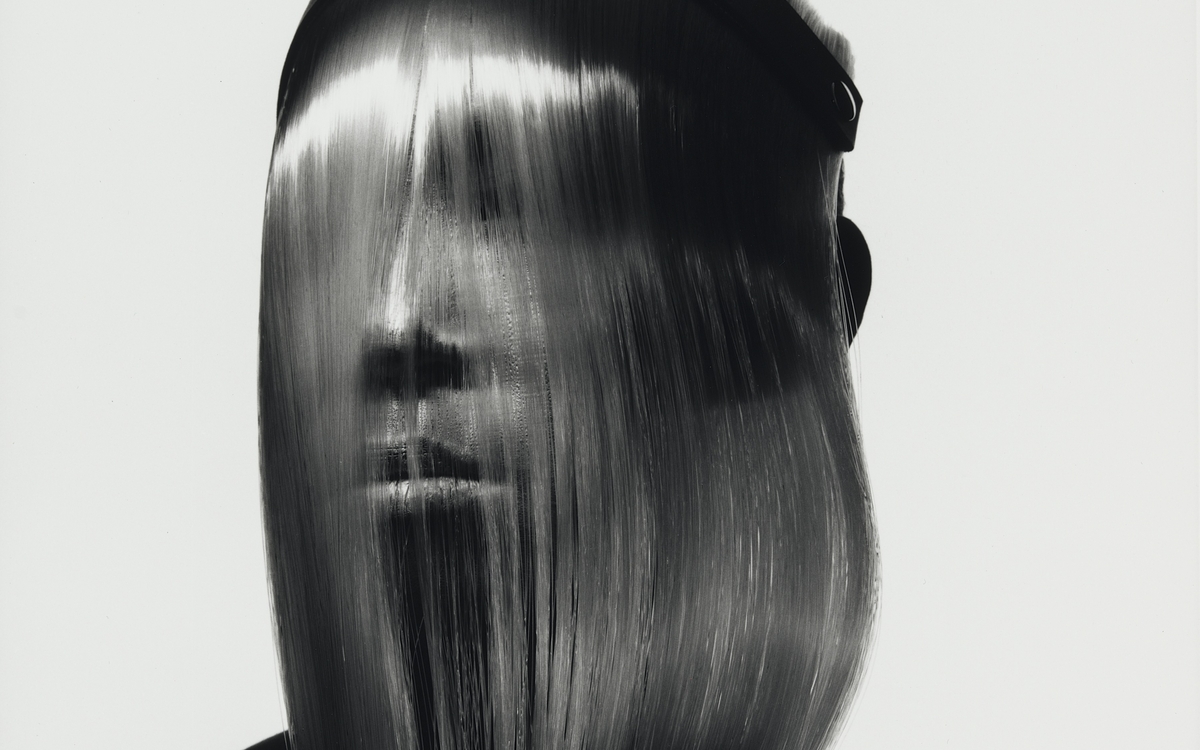
Image: The Irving Penn Foundation
On a vu, on a aimé… l’expo « Penn & Fashion », à la MEP
- WhereMaison européenne de la Photographie5-7 Rue de Fourcy 75004 Paris
- When30 Sept 2026 to 17 Jan 2027
Overview
Machine translated into English.
Reviews
No reviews yet. Be the first to write one.