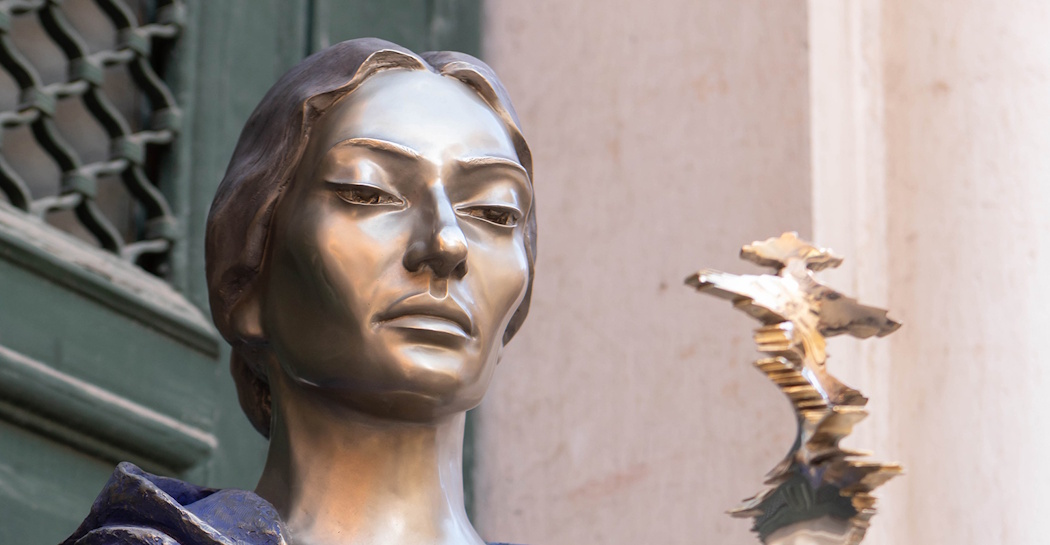
On display is the monumental work by Greek sculptor Nikos Floros dedicated to the figure and voice of Maria Callas.
The Giovanni Barracco Museum of Ancient Sculpture hosts Divina d'Acciaio, a work by Greek artist Nikos Floros that celebrates the archetypal figure of Maria Callas, suspended between classical memory and contemporaneity.
The inspiration for the work has its roots in August 1960, when the voice of Maria Callas resounded in the eternal silence of the theatre of Epidaurus, singing Bellini's Casta Diva before thousands of spectators, in a place consecrated to the ancient rite of theatre.
Like the tragic masks that once echoed over the millennia-old stones of Argolis, the Divina embodies the absolute voice: heir to a civilisation that elevated song to a form of sacredness. In Floros's statue, Maria Callas is wrapped in an antique-style drapery, inspired by the female figures of classical art, in ideal dialogue with the Caryatids, the Korai and the female figures of ancient Greece. In the palm of one hand she holds the sonogram of her own voice in the aria Casta Diva, from Vincenzo Bellini's Norma: thus the image of the Divina and that intangible image of her very song are offered together to the gaze, made concrete in matter, transforming the ephemeral of sound into eternal matter.
Made of stainless steel, luminous and imperishable, the work consecrates Maria Callas in her sculptural apotheosis, accomplishing the miracle of metamorphosis: the fragile and ephemeral nature of the voice assumes the eternal force of ancient marbles, embodied today in the immortal light of the 'Divina d'Acciaio'.
The Barracco Museum, devoted to ancient sculpture by the wish of its Founder, in full coherence with its own history welcomes this contemporary expression of the plastic arts, which recalls Greek statuary. The presence of the Divina in these Halls, however, is intended to be linked above all to Maria Callas's Greekness, to her powerful tragic sensibility of the unresolvable conflict, of the abandoned yet chosen heroine, and to the unmatched dramatic force she drew from the stage. Through Floros's work, the Barracco Museum pays homage to the extraordinary Soprano whom Luchino Visconti dreamed of seeing on the stage of the theatre of Epidaurus, in a tragedy by Euripides or Sophocles.